Baby Panda: Dental Care
BabyBusEducational
4.7150.00 Reviews
- Version
- 8.75.00.01
- Installs
- 50.00M
- Age Rating
- Everyone
Screenshots
Our Review of Baby Panda: Dental Care
 Analysis by Appyee
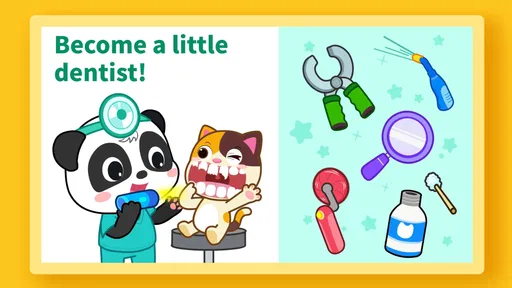
I found Baby Panda: Dental Care most appealing as a gentle, hands-on learning game rather than a substitute for a real dental lesson. The idea is simple: children take charge of a dental salon, clean teeth, and care for little patients through playful tasks. That clear role gives the game an immediate purpose, which is useful when a child is more interested in helping a character than listening to an explanation about oral hygiene.
BabyBus developed this educational game for young children, and it is free to start. It is rated Everyone, works on devices running Android 6.0 or later, and includes optional in-app purchases priced from $0.49 to $2.49 per item. The game has reached over 50 million installs and holds a 4.7 average from around 31 thousand ratings, so it has clearly found a large audience. I would still judge it by the quality of the play loop and by whether its style suits a particular child, rather than by popularity alone.
How the dental salon loop works
I find the dental-salon loop easiest to understand when I treat each play session as a small, complete task rather than a lesson that needs to cover everything at once. That gives me a chance to notice which actions hold a child’s attention and where a quick explanation from an adult helps. It also sets up a practical look at the moments when children or parents may get stuck.
The first action gives children a clear job
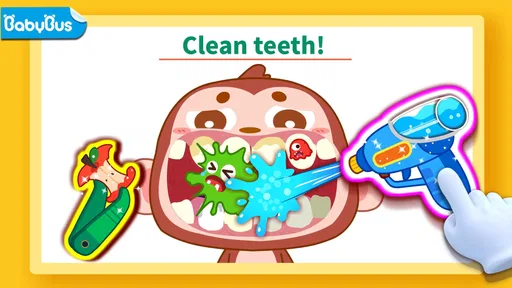
The strongest part of the design is how quickly it establishes the child’s role. Instead of opening with a long explanation, it places the player in a dental-care setting and asks them to do something useful. Cleaning and caring for teeth become actions the child performs, not merely facts shown on a screen. For a preschooler, that difference matters: dragging, tapping, and responding to a character can be easier to understand than a paragraph about brushing habits.
I like this approach because the game turns an unfamiliar situation into a manageable routine. A child can imagine being the person who helps a nervous patient, examines a problem, and makes the teeth cleaner. That pretend-play layer makes the subject less intimidating. It also gives parents a natural opening to talk about what happens at a real dental appointment without making the conversation feel like a warning.
The first few minutes are best used with a child nearby. Younger players may understand the immediate action but still need help connecting the game’s dental salon with their own daily brushing. I would ask questions such as, “What are you cleaning?” or “What would you do at home?” The game can start the conversation, but the adult supplies the real-world connection.
There is also a useful distinction between this title and a basic brushing timer. A timer focuses on duration and routine; this game focuses on role-play and care. That makes it more engaging for a child who wants a story-like activity, while a dedicated brushing app may be better for a family seeking a precise daily reminder.
Feedback keeps the action understandable
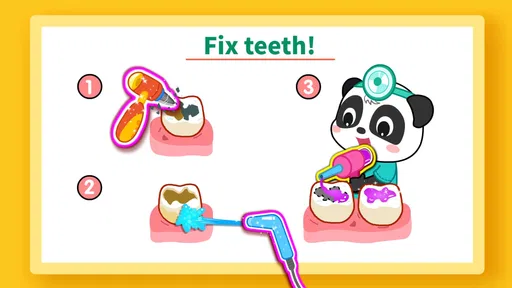
The game’s feedback rhythm is built around visible progress. The child performs an action, sees a response from the dental scene, and receives enough confirmation to understand that the action mattered. This is important in an educational game because a young player should not have to guess whether a tap or movement was successful.
In my experience, this kind of immediate response is more valuable than complicated rules. The player can concentrate on the next small task instead of memorizing controls. That makes the game approachable for children who are still developing coordination, and it also makes short supervised sessions practical. A parent can let the child try independently, then step in only when the meaning of an action needs explaining.
The feedback does not turn the experience into a demanding challenge. That is a strength for the intended audience, but it also limits the game for older children. Players who want strategic choices, difficult levels, or a strong sense of mastery may find the dental-care actions too guided. This is a learning activity with game elements, not a deep simulation of running a clinic.
One useful way to play is to pause after each successful action and ask the child to describe what changed. That turns visual feedback into language practice and reinforces the sequence of care. It also prevents the child from tapping quickly through the activity without noticing what the game is trying to teach.
The reward is progress, not pressure
The reward structure works best when understood as encouragement. Finishing a care task gives the child a sense that the patient has been helped and the salon has done its job. That emotional payoff is modest but appropriate: the child is rewarded for completing a helpful process rather than for defeating an opponent or beating a clock.
This is one reason I would recommend it for a quiet activity before bedtime or during a waiting period. The game can provide a small feeling of completion without the intensity found in action games. It is also easier for an adult to discuss because the reward is connected to care, cleanliness, and responsibility.
Parents should remember that game rewards are not the same as real dental results. Completing a virtual task cannot teach a child every part of brushing, flossing, diet, or professional care. I would use the reward as a bridge: celebrate the in-game success, then encourage the child to apply one simple habit away from the screen.
The optional purchases are worth considering before handing over the device. The game is free, but some items can cost between $0.49 and $2.49 each. That range is not unusual for a children’s mobile game, yet it means I would set up purchase controls and explain clearly that digital items are not required for the child to enjoy the basic activity. A child-focused game should be easy to leave without turning every reward into a request for payment.
Resetting the session gives the loop its purpose
After a care activity ends, the appeal comes from starting another session with a new patient or another dental-care situation. The reset is important because it makes the game feel like a repeatable salon routine rather than a single lesson that disappears after completion. Action leads to feedback, feedback leads to a reward, and the finished task creates a reason to begin again.
That repeatability is useful in short bursts. A child can play for a few minutes while a parent prepares a meal, waits for an appointment, or needs a calm distraction during travel. I would not treat it as an all-evening activity, though. The same guided pattern that makes it comfortable for young children can become repetitive when played continuously.
A practical approach is to let the child complete one session, then reset the purpose yourself. On one playthrough, focus on naming the tools or actions. On another, talk about being gentle with a patient. On a later session, connect the activity with the child’s own morning and evening routine. The game remains the same, but the conversation around it adds variety and makes repeated play more meaningful.
This also answers an important question for parents: does the game teach a lasting habit on its own? I would say it can reinforce familiarity, but it needs real-life follow-through. The best result comes when the child plays, explains what happened, and then practices a related behavior with an actual toothbrush or during a family discussion about dental visits.
Why another session begins
The loop succeeds because each part is easy to understand. The player takes a care action, receives clear feedback, reaches a friendly result, and then has the option to help again. There is no need to master a complex control scheme before the activity becomes enjoyable. For a young child, that low barrier is more important than sophisticated mechanics.
At the same time, the loop is not equally suitable for everyone. Children who dislike pretend-play settings, prefer open-ended building, or want more difficult puzzles may lose interest quickly. Older children may also outgrow the guided interactions and need a more detailed educational resource. In those cases, a real brushing routine, a conversation with a dentist, or a more structured health-learning tool would be a better match.
What I noticed during everyday use
The most realistic use case is not handing over the phone as a complete lesson. It is using the game as a small shared activity. Imagine a child who is worried about an upcoming dental appointment. A parent could play alongside them, let the child manage the salon, and ask what the patient might be feeling. The child gets to rehearse the setting from a position of control, while the adult can correct misunderstandings gently.
Another useful situation is a child who resists brushing because the routine feels boring. Playing a short dental-care session before brushing may make the topic familiar and give the child a playful transition. I would avoid presenting it as a bargain—“play this and then you must brush”—because that can make the game feel like a chore. It works better as a conversation starter followed by a consistent real-world routine.
For independent play, the main question is whether the child can understand the visual instructions without constant assistance. Children develop at different speeds, so I would test the first session together. If the child can identify the requested action and move through the activity comfortably, the game may work well as a short solo experience. If not, shared play will be more rewarding than expecting the app to explain everything.
How it compares with ordinary alternatives
Compared with a children’s video about teeth, this game asks the player to participate. That makes it more memorable for children who learn through doing, although a video may communicate a broader explanation in less time. Compared with a brushing timer, it offers more imagination and character-based motivation, but it does not replace the practical value of timing a real brushing session.
Compared with a general medical simulation, the dental salon theme is narrower and more approachable. It avoids overwhelming the child with too many systems, but it also means the educational scope is limited. I would choose this game for introducing dental-care ideas in a friendly format, not for teaching detailed anatomy or preparing an older child for a serious procedure.
The developer’s focus on baby-panda characters also shapes the tone. The presentation is designed to feel safe and familiar rather than clinical. That can help a hesitant child, but children who prefer realistic explanations may find the approach too simplified. The right choice depends on whether the goal is emotional comfort and basic engagement or detailed instruction.
Small limitations parents should plan around
The biggest limitation is repetition. The action-feedback-reward-reset cycle is clear, but clarity can become predictability. I would keep sessions short and stop while the child is still interested. There is no benefit in stretching a simple learning activity until it feels like work.
The second limitation is that the game can create an impression of completeness. A child may feel that “dental care” means finishing the virtual salon task, even though healthy teeth depend on regular habits and professional advice. A short reminder from an adult keeps the lesson grounded without taking away the fun.
Purchases are another point of friction. Because the game is free to download but offers paid items, I would check the device’s purchase settings before letting a child play alone. This is less about the individual price of an item and more about giving the child a clear boundary around spending.
Finally, the game is aimed at a broad young audience rather than a child with a specific dental concern. If a child has pain, anxiety about treatment, or questions about a real condition, this should not be used as medical guidance. A parent and a qualified dental professional are better sources for those situations.
Who should try it
I think Baby Panda: Dental Care is a good fit for preschool-age children who enjoy pretend roles, gentle touch-based activities, and short educational sessions. It is especially useful when a parent wants to make dental topics less abstract or help a child approach an appointment with less fear. The Everyone rating supports its family-friendly positioning, while the low entry cost makes it easy to test before deciding whether it belongs on a child’s device.
I would skip it for a child seeking complex gameplay, competitive goals, or a detailed health curriculum. I would also skip relying on it as the only tool for improving brushing habits. A real toothbrush routine, adult supervision, and professional advice remain more important than any virtual salon.
The current version is 8.75.00.01, and the game supports Android devices from version 6.0 onward. Those details make it accessible to many older phones and tablets, but families should still consider the device’s screen size and how comfortably a child can perform touch actions. A larger tablet may be easier for shared play than a small phone, particularly when the parent wants to discuss each step.
My verdict on the complete loop
What I appreciate most is the game’s clean rhythm: the child acts, the scene responds, a helpful result appears, and another session becomes inviting without demanding long-term commitment. That structure gives the dental topic a friendly shape. It is not trying to be a complete oral-health course, and it is not at its best when treated like a conventional challenge game.
For families, I would use it deliberately: play a short session together, ask the child to explain what they did, and connect one idea to brushing or visiting a dentist. With that approach, the game becomes more than a tap-through distraction. It becomes a small rehearsal for caring, communicating, and feeling less nervous about dental settings.
My final opinion is positive but measured. BabyBus has made a welcoming educational game with an understandable action-feedback-reward-reset cycle, and its free starting point makes it easy to explore. The repetition, optional purchases, and simplified lessons mean it will not suit every child. For the right young player, though, it is a pleasant way to make dental care feel familiar—and that is a worthwhile reason to begin one more session.
Verdict
Strengths of Baby Panda: Dental Care
- Bright, child-friendly visuals make dental routines feel less intimidating.
- Simple tap controls are easy for preschoolers to understand independently.
- Short activities suit young children’s limited attention spans.
- Gentle animations encourage regular brushing without creating pressure.
- Works well as a playful introduction before a real dental visit.
Limitations of Baby Panda: Dental Care
- Some activities may feel repetitive after several play sessions.
- Educational depth is limited for older children learning detailed dental care.
- Requires supervision to connect the game’s lessons with real brushing habits.
- In-app content may be less engaging without sound enabled.
- Parents may want clearer progress tracking or learning summaries.
Other Releases by BabyBus
View All
Little Panda Policeman
Educational4.0

Little Panda's Chinese Recipes
Educational4.4

Little Panda's Restaurant
Educational4.4

Little Panda's Ice Cream Games
Educational4.3
Similar Picks in This Category
View AllLittle Panda Policeman
BabyBus4.0

Monster Trucks Game for Kids 2
Raz Games4.1
Little Panda's Chinese Recipes
BabyBus4.4
Little Panda's Restaurant
BabyBus4.4
Little Panda's Ice Cream Games
BabyBus4.3

Baby Panda Care
BabyBus3.8
Frequently Asked Questions
What is Baby Panda: Dental Care about?
Baby Panda: Dental Care is an educational children’s game that introduces young players to basic oral hygiene through colorful activities and simple interactive tasks. Children can help characters brush their teeth, clean away food residue, visit a dentist, and learn why regular dental care matters. The friendly presentation makes the subject less intimidating and encourages healthy daily habits through play.
Is Baby Panda: Dental Care suitable for young children?
The game is designed primarily for preschool and early elementary-age children, especially those who benefit from visual instructions and uncomplicated touch controls. Activities are generally easy to understand, although younger children may still need an adult nearby at first. Parents should check the current age recommendation on the Google Play Store or App Store, since ratings and availability can vary by region.
Does Baby Panda: Dental Care require an internet connection?
Many of the game’s basic activities may be playable after installation without a constant internet connection, which is convenient for travel or limited data plans. However, certain features, updates, advertisements, or external links may require access to the internet. It is best to open the game once while connected, review its behavior, and confirm whether offline play works as expected on your device.
Is Baby Panda: Dental Care free to download, and does it contain ads or purchases?
Baby Panda: Dental Care may be available as a free download, but the exact monetization model can differ between Android, iOS, and regional storefronts. Free versions can include advertisements, optional purchases, or links to other content. Before allowing a child to play, adults should review the store listing, configure parental controls, and disable unauthorized purchases through the device settings.
What can children learn from playing Baby Panda: Dental Care?
The game helps children become familiar with everyday dental routines, including brushing teeth carefully, keeping the mouth clean, and understanding that dentists help maintain oral health. Its interactive format can make these ideas easier to remember than a verbal explanation alone. Nevertheless, it should be treated as an educational supplement rather than medical advice, and it cannot replace professional dental checkups or guidance from parents.
Play our best games!


